I began to touch the signs of failure when I saw that deep gap between the 'inside and outside' turn into a wall of mutual distrust. The local employee saw us as intruders or 'eyes' of foreigners, while the American side viewed us as advisory tools to beautify the scene, far removed from any real partnership in sovereign decision-making. With the deterioration of the security situation in late 2003, budgets shifted from construction and reconstruction to insurance and protection. The concept of quotas and party loyalties began to infiltrate ministries, making integrity and professionalism—which we came to promote—face a losing battle against corruption that began to legitimize itself under various names.
I remember well those reports in which I invested the essence of my expertise in higher education. I proposed detailed projects that were essentially pillars of the modern state: university independence, amending the Scientific Council law, reforming the salary scale to ensure the dignity of university professors and the quality of education, and organizing students in an independent democratic organization. Both sides, Iraqi and American, showed great 'protocol' admiration for those plans, but ultimately they were placed on shelves to gather dust. I realized then that the 'ignorant' on both sides feared these projects, because quality education, an independent student organization, and university independence meant stripping parties of their youth incubators, and building solid institutions meant ending the era of 'expediency' and patchwork solutions favored by contract hunters.
The challenges I faced were not only administrative or political but extended to direct threats to my life. Perhaps the incident that left a deep wound and existential anxiety in my soul was the assassination attempt I faced on the grounds of Al-Mustansiriya University. I had invited representatives of various student organizations to present the final draft of the (independent student organization) project—a project I had worked on preparing with consultation from all parties to be a decent democratic space.
The hall filled with hundreds of students and their representatives, and a tense silence prevailed as I ascended the podium to begin the meeting. But before I could finish my first words, I was surprised by a group of students rushing toward the podium in a swift attack. In those moments, my feelings mixed with shock and fear as they hastily escorted me amid a state of chaos to the university presidency building.
I initially thought it was an assault, but the shock came when it turned out that these students—who acted as a spontaneous 'protective shield'—had spotted an extremist group infiltrating the attendees with the intent to carry out a direct assassination on the podium. It was terrifying moments that froze the blood in my veins—not only from fear of death, but from grief over the fate of dialogue in my country. That incident made me face the bitter truth: how can science and reason work in an environment ruled by terrorism and where bullets usurp the right to differ? That moment was the first spark that made me question the viability of continuing in circumstances that did not respect the sanctity of the university campus or human dignity.
Like other democrats, we saw civil society as a necessary condition for political democracy, that ethics cannot be separated from politics, nor work from knowledge, nor power from justice. I believed that building a democratic society required concerted efforts and joint work to achieve justice and equality. However, over time, I began to face greater challenges than I had expected, as forces began to dominate power and seek to thwart our efforts to build a new Iraq. Violence and sectarian and political divisions were hindering our progress, making it difficult to achieve the goals we were striving for.
Despite all these difficulties, I did not completely lose hope. I believed that true change required significant time and effort, and could not be achieved overnight. I drew strength from my colleagues and from those who shared my vision and goals. We worked together, united, to achieve a better future for Iraq, despite all the challenges and obstacles in our way.
The mechanism for selecting ministers at that stage was based on a nomination system by members of the Governing Council, where each member had the right to nominate one candidate for a ministerial portfolio. I later learned that my name had been strongly put forward for the Ministry of Higher Education and Scientific Research, receiving exceptional support from three prominent council members: Dr. Mohamed Bahr Al-Uloom, Mr. Hamid Majeed Moussa, and Dr. Adnan Al-Pachachi. This triple endorsement was a unique case that did not recur with other candidates, reflecting great confidence in my academic qualifications and independence.
Despite this consensus, my ministerial appointment did not happen due to opposition from Dr. Ibrahim Al-Jaafari, one of the prominent leaders of the Dawa Party. This opposition was not based on professional reservations, but was a reflection of power balances within the council. Al-Jaafari, from the Dawa Party who later became prime minister, considered that the members who nominated me had exhausted their chances in nominating other figures closer to their party circles or those with loyalty ties.
I still remember that meeting with Dr. Adnan Al-Pachachi in his headquarters in Mansour. The atmosphere was charged with purely Iraqi discussions about the fate of the stage and the complexities of the future. With Mrs. Maysoun Al-Damluji and Dr. Saad Abdul Razzaq present, the conversation turned toward my nomination for the Ministry of Higher Education. Al-Pachachi asked me in his calm tone: 'What would you do if you became Minister of Higher Education?' I answered in a tone overcome by apparent indifference, but hiding behind it a heavy load of reform visions I believed in. I said briefly, which astonished him: 'I would work to dissolve the ministry!' I meant by that my old dream of granting universities full independence. He was surprised and exclaimed: 'Doctor, we place you in a position to run and you want to dissolve it?' I smiled at his surprise and reassured him that this project was postponed due to the lack of maturity of its conditions, and that my focus was now on the quality of education and developing its details.
Being a completely independent academic figure, not belonging to any party bloc that could provide the necessary political cover in that emerging quota system, the opportunity to assume the position was lost. This experience revealed to me early on that standards of competence and international expertise would—unfortunately—collide with the wall of party quotas and narrow loyalties that began to impose their rhythm on the future of state administration in Iraq.
During that critical period of 2003, I continued my duties as an advisor for higher education, maintaining daily and intensive contact with Minister Dr. Ziyad Abdul Razzaq Al-Aswad. Our discussions focused on outlining the initial features of managing the ministry under exceptional circumstances, as well as providing advice regarding the nature of the relationship with the American advisor for higher education, "John Agresto."
In those meetings, I played a role that extended beyond technical consultancy to linguistic and cultural mediation. The nature of communication between the minister and the American advisor required a party who deeply understood the complexities of both the Iraqi and American academic systems, especially with the language barrier limiting the minister's ability to direct and smooth communication with the American side. Therefore, I sometimes oversaw the formulation of this understanding to ensure that national interests were not lost in the corridors of academic or administrative misunderstanding.
We technocrats had the vision, but our hands were bound by higher political wills that did not believe in science. When I felt that staying in this chaotic environment would turn me into a 'false witness' to a reality unrelated to logic, I made my difficult decision to withdraw. I packed my bag and decided to return to the University of Birmingham, feeling the bitterness of losing the 'golden opportunity' that shattered on the rock of mismanagement. The international academic community won me back, but Iraq lost in that moment an opportunity to establish values of scientific research and integrity, leaving the homeland to be reshaped by those who do not understand the value of reason and national expertise.
When I made my decision to end my stay in Iraq, Dr. Ziyad Al-Aswad expressed great regret at my desire to leave. In an attempt to appreciate my efforts and retain me within the state cadre, he offered me the position of Cultural Attaché in London—a position within his ministerial powers. Despite the job's attractiveness, I clearly declined. My passion to return to my laboratory and students at the University of Birmingham outweighed any diplomatic or administrative ambition.
The minister tried to convince me with a proposal to combine both positions: to be a cultural attaché while simultaneously practicing my work as a professor at the university. But I rejected the idea outright, as it contradicted my professional and ethical principles, which reject dual roles—especially when one of them would necessarily become a 'symbolic' or inactive role due to time constraints. I would not accept for myself to occupy a functional space without the real capacity to fully give in it.
Thus, the decision to return to the University of Birmingham was like closing a short and intense chapter of my life, spent in earnest attempts to contribute to building a new educational system. Although the feeling of unfulfilled dreams I had come for lingered, I left believing that a true academic serves his homeland not only from within positions, but through maintaining his scientific integrity and continuing knowledge-giving wherever he may be.
Upon my return to Birmingham, a pressing question settled in my mind: how could I repay my debt to the homeland and contribute to supporting higher education in Iraq from my position in Britain? I became convinced that the real path to reform lies in empowering the human element, specifically through training academic leaders and teaching staff in modern management concepts, quality standards, and contemporary scientific research tools from which they had been forcibly cut off during the years of economic blockade.
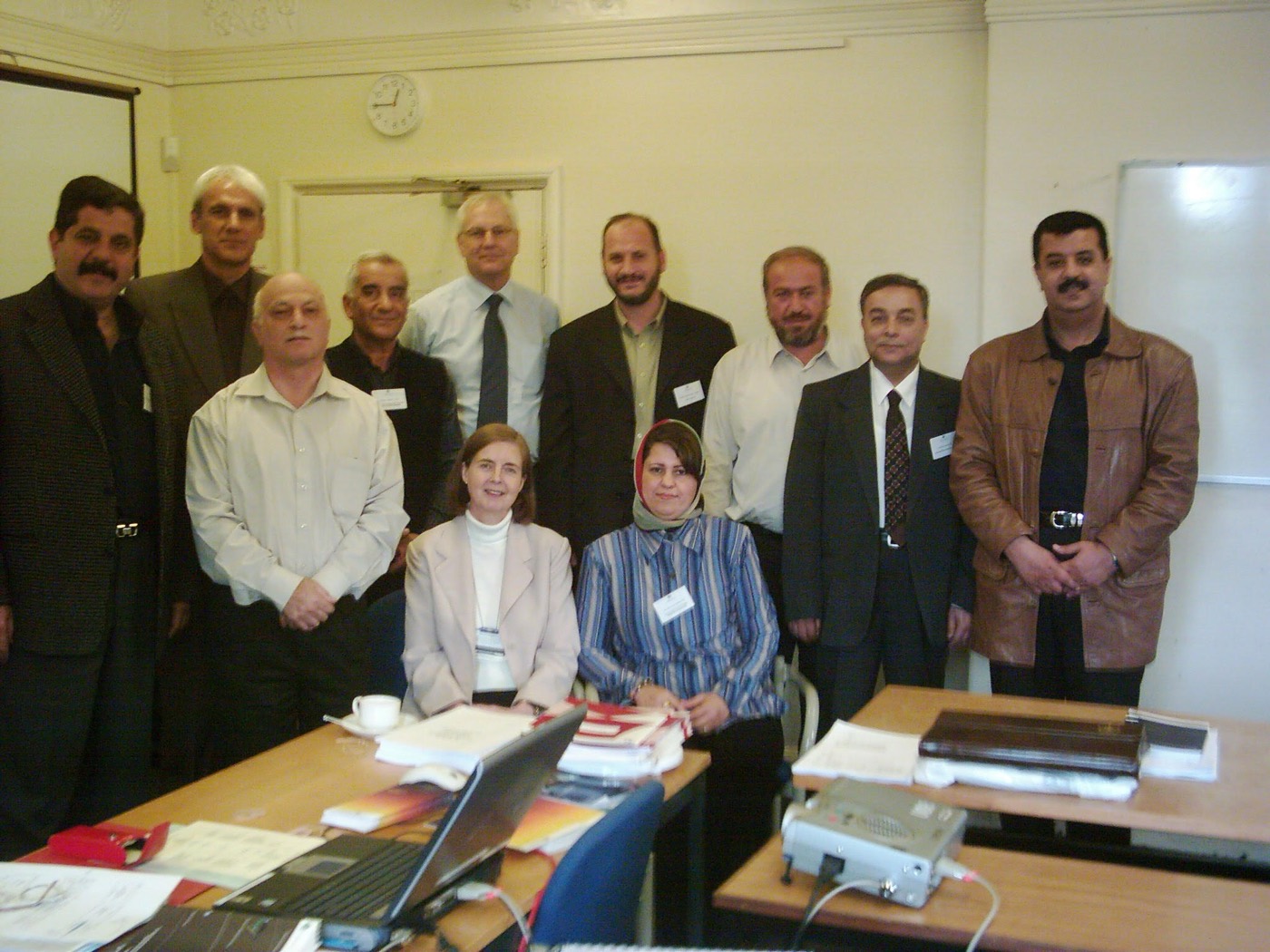
These efforts culminated in obtaining funding from the British Council for the University of Birmingham, which gave us a golden opportunity to bring successive groups of university presidents, deans, and senior professors. Over intensive weeks of diligent work, participants engaged in workshops covering governance, strategic leadership, financial sustainability, curriculum development, as well as field immersion in the British academic reality. This giving did not stop with my move to Dublin but continued with the same momentum, deepening my belief that investing in building minds and developing competencies is the cornerstone for reconstructing Iraq and ensuring its scientific future.
I could not bear to stay in Birmingham for long; I found myself trapped in a quiet academic routine lacking the excitement and great challenges I had lived in the heart of Baghdad's events. Amid this feeling of monotony, an exceptional academic offer arrived from University College Dublin (UCD) in Ireland. Since I already held the rank of Professor at the University of Birmingham, the chair of Biochemical Engineering was not what tempted me; rather, the real value of the offer lay in its enormous financial and research horizons. I was offered a distinguished salary ensuring high stability, and more importantly, a massive financial package placed at my disposal to support my advanced laboratories and research in biochemical engineering. This exceptional support provided me with an integrated research environment free from funding constraints, making the move a true qualitative leap in my scientific career.
I moved to Dublin to begin what was the richest period of my professional life. I not only engaged in academic work but founded and managed the Cell Culture Research Center and contributed to establishing the National Institute for Bioprocessing Research and Training (NIBRT) in Ireland. During those years, I was a member of the government committee for formulating the Irish state policy on the scientific workforce. From a purely scientific perspective, I continued my pioneering research based on large funding from the Science Foundation Ireland, and was awarded the Donald Medal in 2008 in recognition of my outstanding global contributions to tissue culture and biological engineering.
I remained in Dublin for several years surrounded by this scientific momentum before deciding to retire voluntarily. Despite the beauty of Ireland and the kindness of its people, its rainy and snowy climate began to drain my energy, encouraged by my wife's desire to return to her university and her country Morocco to settle there with our two beautiful daughters, beginning a new chapter of our lives away from the noise of laboratories and the cold of the north.