Hana Adwar and the Amal (Hope) Association
I met Hana Adwar during that period that witnessed the birth of a solid institutional idea embodied in the establishment of the Iraqi Hope Association in 1992. I take pride in being among the first founders of this association. "Al-Amal" (Hope) was launched at a critical time when Iraq was groaning under the weight of embargo and wars, emerging as an urgent humanitarian response aimed at aiding the affected and empowering vulnerable groups. Hana and her team's activity represented the executive and field complement to the vision I worked on with my friend the architect Numan Muna and our colleagues in the diaspora. The charitable fund we established provided support and funding for projects that Hope implemented on the ground with resilience and faith. Over the years, under her leadership, the association's role was not limited to material relief but transformed into a beacon for defending women's rights, establishing civil peace values, and combating corruption—especially after its full weight shifted to Baghdad after 2003.
My relationship with Hana was built on mutual respect and deep appreciation. I remember with gratitude that during the association's first conference, she placed her trust in me by expressing her desire to nominate me for the association's presidency. This pleased me greatly, but due to my significant academic and political preoccupations at that time, I apologized for accepting the task and instead proposed nominating my friend Numan Muna for the position, which was indeed done. I attended many of the association's conferences and activities with her, and during some of my visits to Iraq, I took the association's headquarters as my residence—affording us golden opportunities for extended discussion about general political affairs and the association's policies. I always emphasized that the association should remain essentially a humanitarian charitable institution, while she had another view seeing the necessity of integrating the humanitarian dimension with women's issues and human rights as inseparable wholes.
Hana Adwar's presence in the Iraqi civil scene has always been associated with courage and boldness in speaking truth, earning her international respect and high awards in peace and human rights. The connection between our political and democratic efforts abroad and the resilience of the Hope Association inside remains a living witness that Iraqi civil work was always a nationalist act transcending borders, striving to build the human before the infrastructure, and investing in "hope" as the only choice to confront the great defeats the homeland has experienced.
Numan Muna: Architect of Iraqi Identity in Exile and Homeland
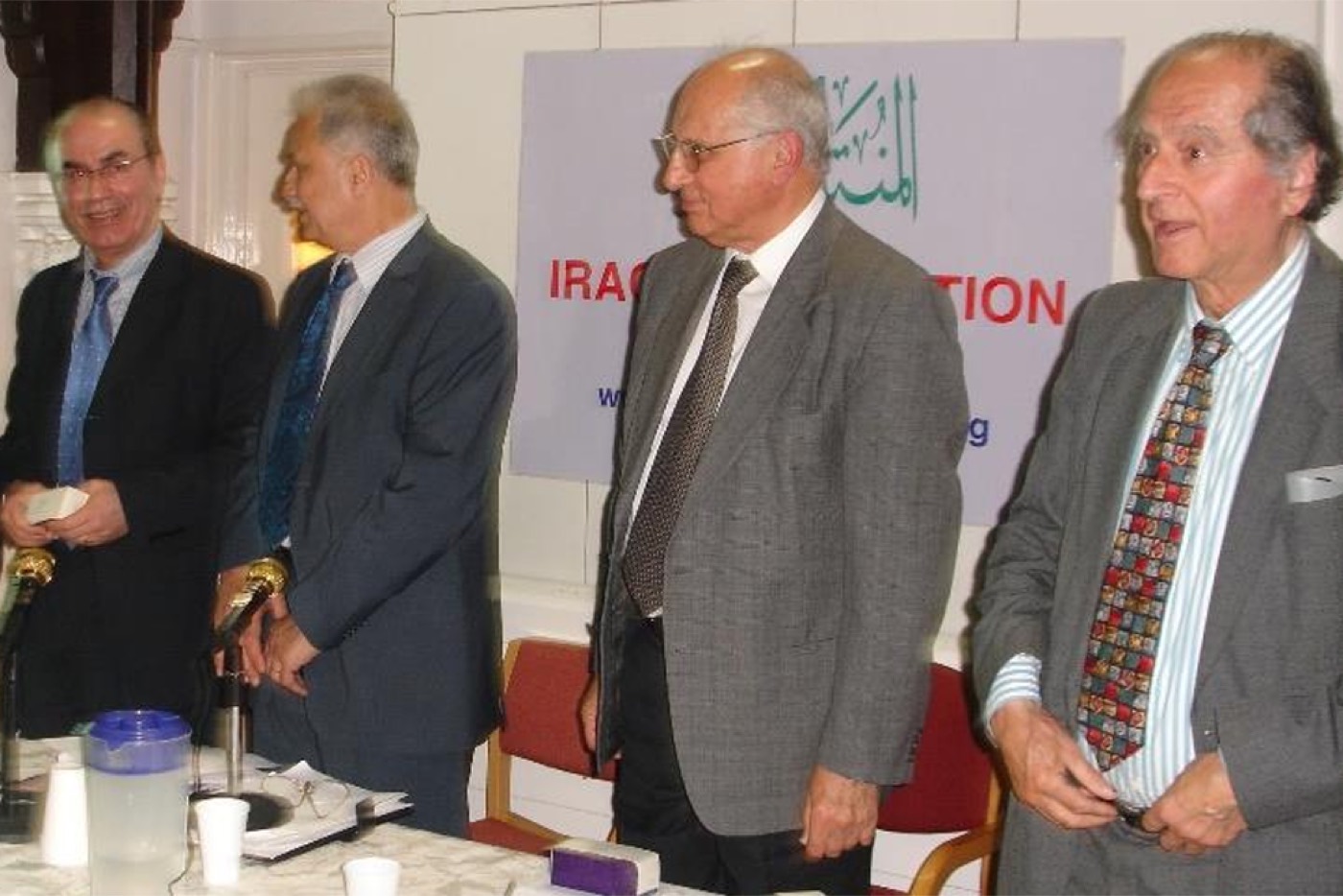
Numan Muna was not merely a fellow traveler or a prominent architect for me, but an exceptional personality radiating refinement in the corridors of Iraqi civil work in Britain. I share memories etched in the conscience of beginnings with him, when we laid together the foundations of the "Iraqi Forum." I remember well those long discussions preceding establishment, and how Numan later became the backbone of this entity, leading it with the wisdom of one who understands the engineering of societies as he understands the engineering of buildings.
The Forum was more than a charitable institution providing legal and social advice—it was a home reinforcing our identity in exile and giving us a platform to support our people inside, especially through the "War Victims Relief Campaign" we undertook together.
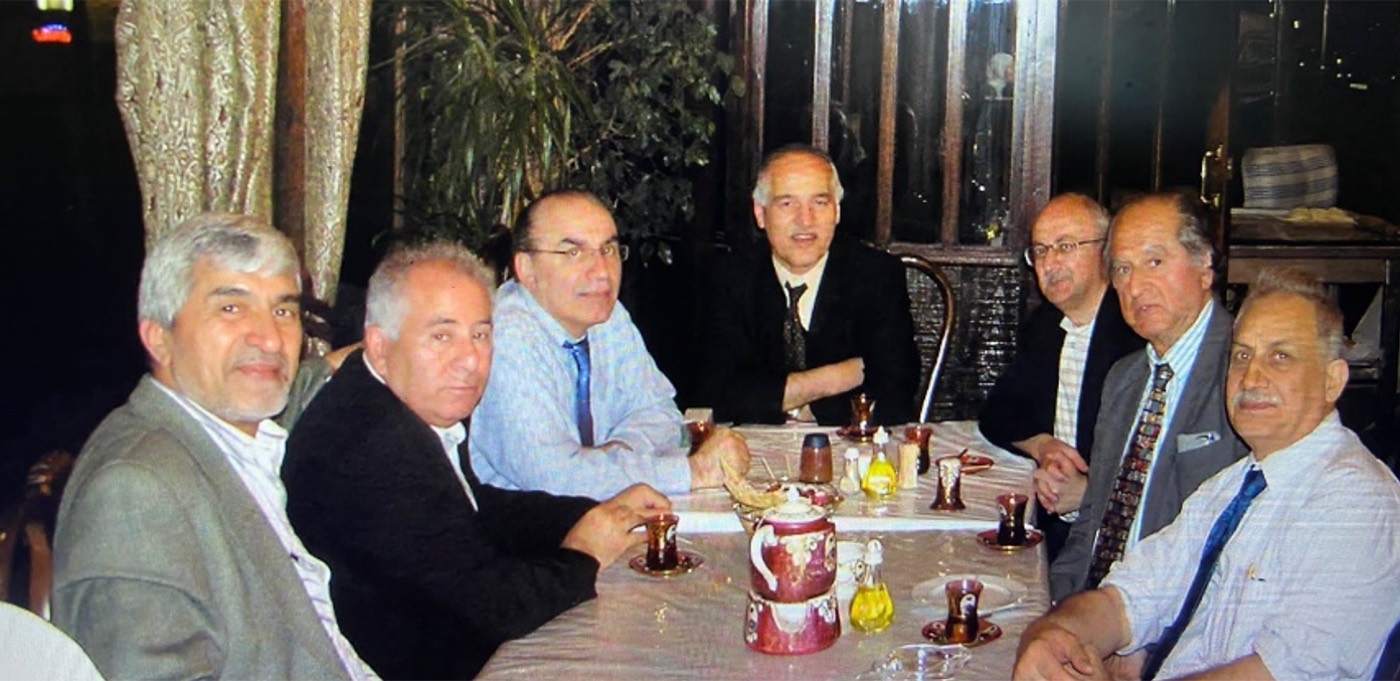
When we moved to a more institutionalized and impactful phase by establishing the "Iraqi Humanitarian Hope Association" in Damascus, I was a witness and partner in that birth, playing a foundational and financial role. From the first conference, our choice of Numan as president stemmed from our absolute trust in his ability to bridge ambition and reality. There, in Damascus and then in Iraq, our relationship strengthened further, and the circle was completed with dear colleagues:
- Hana Adwar: The icon of struggle who managed the association's helm with courage, transforming it into a resounding voice against tyranny and sectarianism.
- Jamal Al-Jawahiri: With his presence, and that of Numan and other colleagues, we formed a team seeing independent civil society as the only way out of crises.
I looked at Numan as if posing myself a difficult question: Which prevails in him—the architect's spirit that never overlooks the finest details, or the strategic leader's acumen who draws institutional paths with mastery? The answer always lay in his unique ability to combine both. Numan, with Hana Adwar, crafted a refined human rights discourse, making "Al-Amal" one of the most prominent platforms defending human rights, women, and youth in the darkest conditions.
Numan did not limit himself to field work but was our ambassador par excellence in international forums. His intervention at the "French Popular Relief" conference in 2017 reminds us of his competence when he conveyed to the world with confident eloquence the association's experience in displacement camps. It was not mere numbers but a story of determination to break sectarian barriers through children's eyes and cohesion.
What distinguishes my relationship with Numan Muna is this mix of community work in exile and humanitarian commitment inside. He was pivotal in every critical report I wrote about the association and in every cry for change I issued. For me, Numan remains the friend who always proves that civil society is not just a profession but a tool for radical change—building a homeland that accommodates everyone.
Abdul Ilah Tawfiq: Guardian of Memory and Friend of Difficult Days
Within our shared activity inside the "Iraqi Students Association in the United Kingdom," Abdul Ilah Tawfiq emerged as one of the most active figures in confronting dictatorship. He was a kind and beloved human being, possessing a rare nature in defending friends—his principles were a red line, but his friendships were a safe haven; he would defend his companions in hardship and prosperity, as if reminding us that friends are never sacrificed no matter how harsh the days.
Abdul Ilah never withheld an invitation or hospitality from me; whenever I arrived in London, his house was open to me, surrounding me with care reminiscent of a father's concern. He would sometimes scold me with paternal care if I attacked a friend's idea or opinion, fearing I might lose those human bonds he cherished.
His generosity was not artificial but innate. I remember a situation exemplifying his remarkable selflessness: he once asked me to wait near a supermarket to take a friend somewhere. I waited for over two hours, and he returned laughing, saying: "He's a good kid—I took him all the way to Brighton!" He had traveled long distances merely to fulfill a human duty toward someone he might not even know well.
Abdul Ilah carried his struggle history from Iraq, where he faced persecution and imprisonment, but he never stopped supporting his comrades or promoting his noble principles. At every political or social activity—whether at the Iraqi Forum, the Academics Association, the democratic current, or Communist Party celebrations—he was present with his inseparable camera. He collected hundreds of thousands of photos that today constitute an invaluable visual record of democratic organizations' activities in Britain.
Abdul Ilah Tawfiq was one of the foundational pillars and prominent figures who deeply contributed to establishing the Iraqi Forum in London. In that pivotal era, Abdul Ilah did not view the Forum as merely a charitable or social institution but as a "home for Iraqis" of various opposition spectrums, especially those from the leftist and democratic currents. His pivotal role was evident in his persistent efforts to institutionalize Iraqi social work in Britain, making it a civilizational facade reflecting the sophistication and organization of the opposition, with exceptional attention to documentation and media—leaving his mark on many publications and printed materials issued by the Forum and leftist circles, believing that word and image are weapons no less effective than organizational field work. Above all, Abdul Ilah paid special attention to the affairs of Iraqi intellectuals and artists in exile, proceeding from a firm vision that the Forum should be a genuine incubator for Iraqi creativity opposing dictatorship, and a space befitting creators—not merely a center for traditional aid.
Abdul Ilah Tawfiq was not just a companion on the Iraqi path but the living conscience connecting internal struggle and exile work, documenting with his heart and lens the most beautiful stories of our generation.
Jani Kassab: An Academic Figure with a Beating Patriotic Heart
In the folds of memory, personalities emerge whose absence would render these pages incomplete without their fragrant remembrance. Among them comes Dr. Jani Kassab, that wonderful personality joined by bonds of friendship and deep affection. I knew him closely through our joint work in the Iraqi community and our diligent activity in the Association of Iraqi Academics. His presence at seminars and events was like the driving spirit of those gatherings, attending with a spirit full of belonging. When I moved to Dublin, meeting him became a beautiful ritual not to be missed—my wife and I, whenever we crossed the sea toward the Welsh coast on our way to Birmingham, would stop in "Bangor" to enjoy warm hours in his and his wonderful wife "Umm Susan's" hospitality before continuing our journey. His resounding laughter had a special charm that made you forget the pains of exile and the harshness of days, wrapped in a delicate human sense always connected to the suffering of our people in the homeland.
Jani was one of the pioneering generation who carried Iraq's academic ambitions to the world's horizons since leaving among the first scientific scholarships to Britain in the 1950s, excelling in mathematics and statistics. Despite attaining the highest academic degrees and returning to contribute to building the College of Science at the University of Baghdad, fate brought him back to the United Kingdom to settle at the University of Bangor. There, he was not merely a professor of mathematics but a scientific and administrative pillar, heading the Department of Mathematics and Computer Science and becoming after retirement an "emeritus professor," having supervised generations of students and researchers. Alongside this knowledge giving, he emerged as a distinguished social and union leader through his presidency of the Association of Iraqi Academics, transforming it into a bridge of love connecting migrant competencies with their roots. I cannot forget his continuous support for the Iraqi Forum's projects—he was not merely a moral presence but an encourager and supporter of many Forum initiatives, as if applying his human philosophy as tangible reality. Jani remained a spiritual father to academics in exile and a unifying national reference until his death in Wales on September 10, 2024, at the age of ninety-three, leaving behind a legacy of science and integrity, and the echo of a laughter that never fades from the memory of all who knew him.