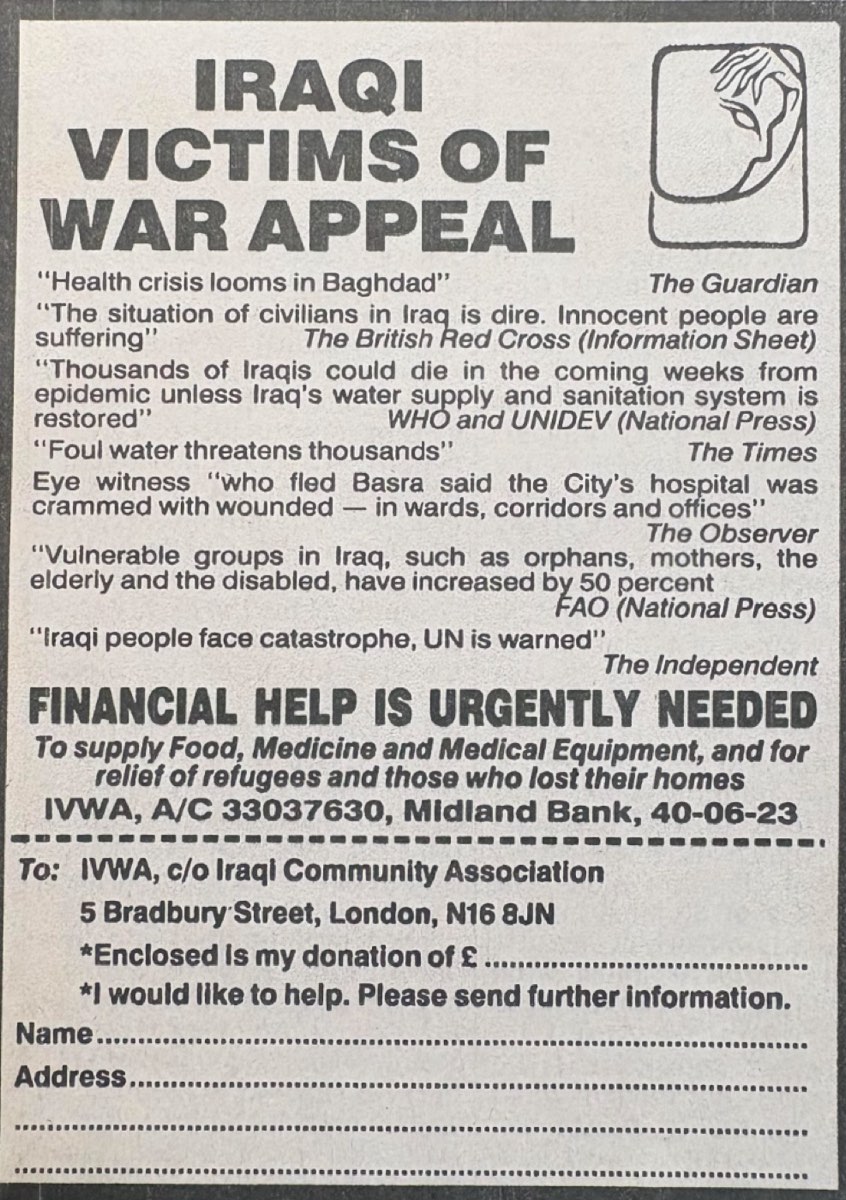
The story began in a pivotal moment in the spring of 1991, when images of destruction and reports from Iraq poured over us like lightning, carrying scenes of victims, the groans of the wounded, and echoes of the popular uprising that erupted from the far south to the far north. That popular cry was met with unparalleled brutality. With the dying of the war's fires and the calming of the storm, the Iraqi people found themselves facing an indescribable tragedy—millions displaced in harsh camps and the desolate marshes, and millions more inside cities fighting a bitter daily war for survival.
These scenes filled my being with deep concern and unceasing sorrow. In that critical moment following the silence of the guns, the idea was born in my mind of the necessity of creating an urgent and organized humanitarian channel to rescue the sons of my country from the catastrophe of the "post-war" period, which seemed to me at the time more dangerous and devastating than the war itself. When I actually began taking the first executive steps to lay the foundations for a relief campaign for war victims, my friend, architect Numan Muna, joined me. Our expertise and efforts combined in managing this charitable relief fund, which I named the "Iraqi Victims of War Appeal," with our friend Osama Al-Wakil helping complete the institutional requirements.
We started from the Iraqi Community Association, and with the sincere dedication and commitment of its members and our friends, we succeeded in transforming this personal concern and silent pain in our hearts into an organized institutional relief effort, targeting millions of Arabs and Kurds without discrimination, especially the most vulnerable groups—women, children, orphans, and the elderly who were ground between the hammer of military destruction and the anvil of the unjust economic blockade. We focused in our message to British society on the shocking truth that thousands of Iraqis were facing silent, inevitable death due to epidemics beginning to ravage their bodies as a result of the destruction of water and sewage networks, warning of an environmental and health catastrophe unless the situation was immediately addressed.
Through a wide-ranging advertising campaign and intensive, moving appeals in major British newspapers, we succeeded in stirring the consciences of thousands of Britons and Iraqis residing in the United Kingdom, who responded to our appeals with unprecedented generosity and human kindness. Thanks to this solidarity, the campaign transformed into a round-the-clock operations center receiving large sums of money and massive boxes of medicines, medical supplies, and clothing. We spent nights organizing and preparing them for shipment through complex logistical corridors, including transit through institutions in Jordan, and coordination with parties and international non-governmental organizations, to ensure their delivery through direct and indirect routes to hospitals in the heart of Iraq, and to afflicted families and displaced persons on the northern and southern borders. We were scrupulous and painstaking in ensuring that aid reached its rightful recipients directly and that the regime did not appropriate or exploit it for its own purposes.
This campaign confirmed to us that sincere humanitarian work is the only bridge that was able to cross over the wounds of war and its material and psychological devastations. Although the campaign ended in time, it left in my depths a never-ending sense of pride and honor for this national and humanitarian duty, which I consider today the most distinguished and noble mark in my journey.
What we did was not merely collecting donations or distributing aid; it was a cry of protest against annihilation, and proof to the world that the Iraqi spirit is unbreakable even in the darkest circumstances. I learned from that experience that the homeland is not just a geographic location, but those human beings with whom we shared the bitterness of fear and the hope of survival. Today, as I recall those days, I feel a tremor in my heart that brings back memories of eyes in which we never lost hope, and of hands that extended from London to dress a wound in Basra or Dohuk. This effort will remain a crown I place on my head for my entire life, reminding me always that a human being in his purest state is one who builds bridges while others demolish everything, and that love of homeland is manifested in its most beautiful form when private pain becomes public hope, and a tear becomes a drop of water quenching the thirst of strangers.