Our visit to Baghdad in October 2008 came at the invitation of Minister of Science and Technology Mr. Raed Jahid Fahmi, who was the incubator and primary supporter of the "Network of Iraqi Scientists Abroad." Mr. Raed was not just a minister who invited us; he was the vision that tried to accommodate our expertise. In our official meeting with him at his office, attended by the ministry's deputy Dr. Samir Al-Attar, the ministry's advisor Dr. Adel Matloub, and the Ministry of Industry's advisor Dr. Munqith Al-Bakr, there was deep discussion about the necessity of institutionalizing the relationship with the state, and transcending traditional mentalities that hinder innovation. Mr. Raed always emphasized, with a critical and aware vision, that the Iraqi collective mind needs institutional organization and a memorandum of understanding ensuring the continuity of this effort, warning that the absence of a national scientific strategy would make all development attempts mere isolated islands.
Our meetings varied thereafter. We met with Minister of Oil Dr. Hussein Al-Shahristani, who expressed conviction and appreciation for the initiative and affirmed Iraq's need for it. We also met with Minister of Health Dr. Saleh Al-Hasnawi, who proposed a medical project for endemic diseases and welcomed our participation. In the same context, we met Dr. Ahmed Reda, head of the Investment Authority, and Mr. Abdulrahim Al-Ruhaime, head of the Media Authority, to discuss cooperation mechanisms.
We visited the Universities of Baghdad, Al-Nahrain, and Al-Mustansiriya, where we were warmly received by their scientific figures: Dr. Mousa Al-Mousawi, Dr. Adnan Al-Janabi, Dr. Taqi Al-Mousawi, in addition to Dr. Riyad Aziz Hadi and Dr. Mohamed Al-Ani, who showed enthusiasm to invest our expertise. On the morning of October 8, we met with the Minister of Higher Education and Scientific Research Dr. Abd Dhiab Al-Ujaili, where we discussed building databases of competencies and ways to develop laboratories.
We concluded this visit with a meeting with Prime Minister Nouri Al-Maliki, who emphasized the role of scientists in the nation's renaissance, expressing his desire to invest our expertise in rebuilding the state's regulatory apparatus. We also met with the head of the Council of Advisors Dr. Thamer Ghadhban. The trip did not lack meetings with political figures, such as dinner with Deputy Prime Minister Dr. Barham Salih, and another with Dr. Fouad Masoum in the presence of Mr. Raed Fahmi and Mr. Lubaid Abbawi.
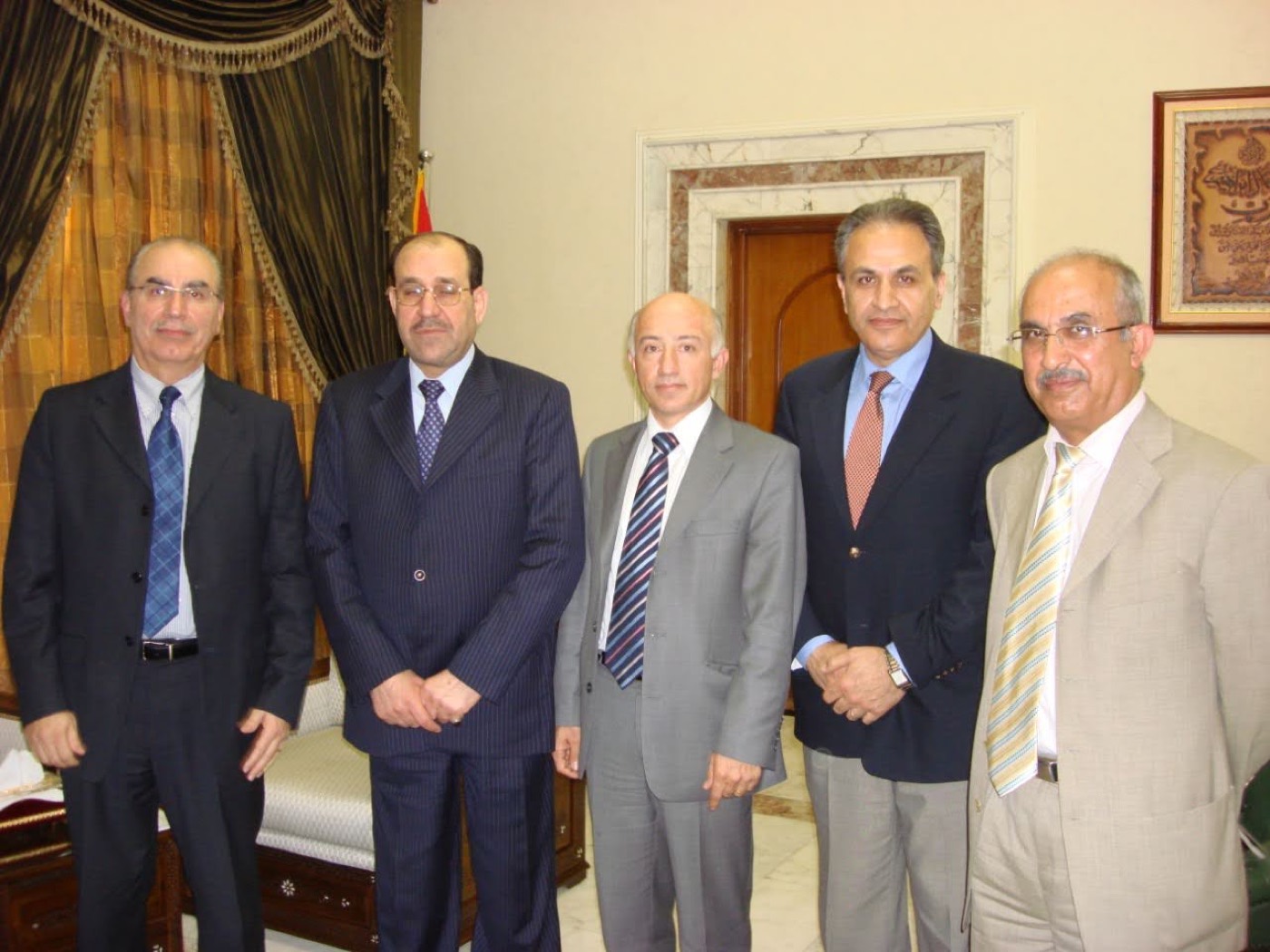
The conclusion of the visit was on October 9, where we gave lectures at the Ministry of Science and Technology. There, after hearing Mr. Raed Fahmi's views on science policies, we became convinced that the will existed, but the "seed" needed more stable soil. Our delegation, with Dr. Adel Matloub and my colleagues Dilawar Aladdin and Riyad Al-Mehaidi, made exceptional efforts, with logistical support from Mr. Farhad Aladdin.
Today, as I recall the tape of those memories, I see clearly how the reform efforts we carried collided with a complex reality. Those meetings were sincere national scientific seeds, but they were also part of the "seeds that did not bloom"—not due to a flaw in vision, but due to the complexities of a nation searching for a path to recovery.
Over the years of giving, NISA's efforts culminated in remarkable field achievements, foremost among them the implementation of the UNESCO project to rehabilitate higher education in Iraq, which lasted five years and included developing the quality system in education and scientific research and twinning programs. A team of seven network members conducted field tours and workshops in most Iraqi engineering colleges to evaluate and improve their performance, followed by a series of major international conferences in cooperation with the ministries of higher education in Baghdad and Erbil, and the Ministry of Science and Technology, addressing scientific research policies and higher education development under ambitious slogans such as "Towards a Knowledge Society Development." Our communication with universities inside never ceased, as network members participated in all annual quality conferences at the University of Kufa, presented countless workshops in teaching skills and scientific research, and responded to ministry and university invitations to participate in discussion committees, thesis evaluation, and technical advice for achieving international accreditation.
As part of our effort to stimulate scientific excellence within the homeland, we established the "NISA International Award," granted annually on Science Day for the best Iraqi scientific research in six different fields, to be a bridge of communication and appreciation between scientists abroad and researchers at home. Our role was not limited to the academic side but extended to providing strategic studies to the Iraqi state, including a comprehensive study on capacity building in administrative and developmental fields at the request of the Prime Minister's office. NISA's journey is a story of loyalty that began with a word on a plane and turned into a global institution placing all its cognitive weight and its members' expertise in service of Iraq, believing that investment in minds is the only investment that never loses, and that returning expertise is the best alternative to traditional return options that may not be available to all.
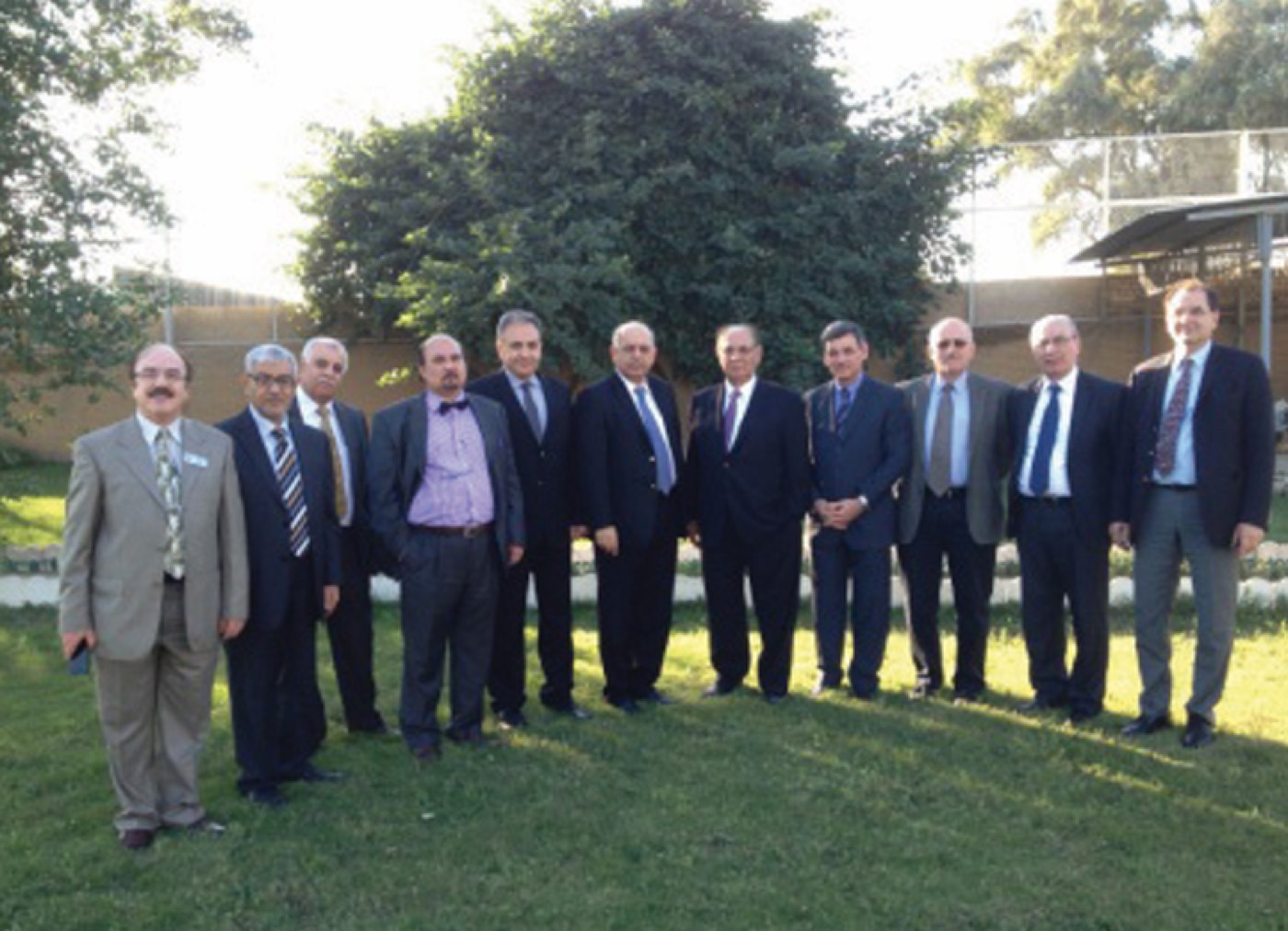
"The First World Conference of Competencies in the Diaspora" vs. "The Conference on Scientific Research Policies and Their Role in Sustainable Development Programs"
In late 2008, I packed my bags and headed to Baghdad in response to an official invitation from the Iraqi parliament to participate in the first World Conference of Competencies in the Diaspora. I carried a mixture of hope and apprehension, thinking that the state had finally begun to realize the value of emigrant minds to rebuild what wars had destroyed. But from the first moments of the sessions, that rosy picture dissipated when I discovered I was not at a scientific event but at the heart of a propaganda festival and a political show lacking the most basic levels of professionalism, where party loyalties and the hated quota system dominated the scene under a thin academic cover. It was painful to see genuine competencies treated as decorative pieces for official photos, while the hall was crowded with individuals whose only qualification was loyalty, to the point where the organizing committee subjected the list of honorees to sectarian balances rather than scientific criteria.
Despite delivering a lecture on the importance of diaspora competencies, I was completely dismayed when I saw a great scientist like Dr. Riyad Al-Mehaidi denied recognition because his sect's "share" had been filled, while another person was honored merely to complete the superficial pluralistic form. The most amusing and heartbreaking irony I will never forget was when that person came to me asking innocently why he was being honored, and it later turned out he worked as a "kebab seller" in London with no connection to scientific research! My bitterness reached such a point that I hesitated to rise when my name was called for the award, had it not been for Dr. Mousa Al-Mousawi, sitting next to me, pushing me. And so the three days passed amid the noise of hollow rhetorical speeches delivered by people who could barely read, ending without real recommendations, leaving in my soul a heavy feeling that we had been mere false witnesses in a pre-staged play to empty the concept of competence of its content and turn nation-building into temporary slogans that expire with the end of the conference.
Perhaps, when I recall the proceedings of that meager conference and semi-theatrical performance, my mind naturally draws a parallel with another conference: the "Conference on Scientific Research Policies and Their Role in Sustainable Development Programs," held at the invitation of Minister of Science and Technology Mr. Raed Fahmi in June of the same year. Remarkably, the minister could not obtain the financial costs for holding the conference from Prime Minister Maliki at that time; however, relief came with the help of an American delegation visiting Baghdad, who provided significant support and assistance that enabled the conference's funding and convening.
The main objective of the conference was to study the problems of scientific research in Iraq from an integrated functional perspective; starting from the country's national plan, through priority-setting based on statistical data from various research centers across Iraq, to identifying missing links requiring establishment and legislation.
The conference witnessed wide and distinguished attendance, with a large number of my fellow expatriate scientists participating, along with ministers, parliament members, and a massive gathering of academics, university lecturers, and those interested in scientific research policies. During its activities, I delivered a speech on behalf of the "Network of Iraqi Scientists Abroad (NISA)," presenting the network's role in developing Iraqi capacities. The conference was an excellent scientific demonstration where numerous papers aimed at organizing scientific research, innovation, and technology transfer were presented, including the paper I co-authored with colleague Osama Karim on "Technology Incubators."
What is crucially important when drawing a comparison with the Competencies Conference is that this conference was characterized by high scientific seriousness and genuine interest focused on diagnosing and addressing the institutional reality, directing innovation toward vital sectors, and building strategic partnerships—far removed from the false propaganda displays based on political quota that marked the Competencies Conference. The difference returns to the nature of each conference's chair; the first was for a power figure, the second for one with "white hands."